



















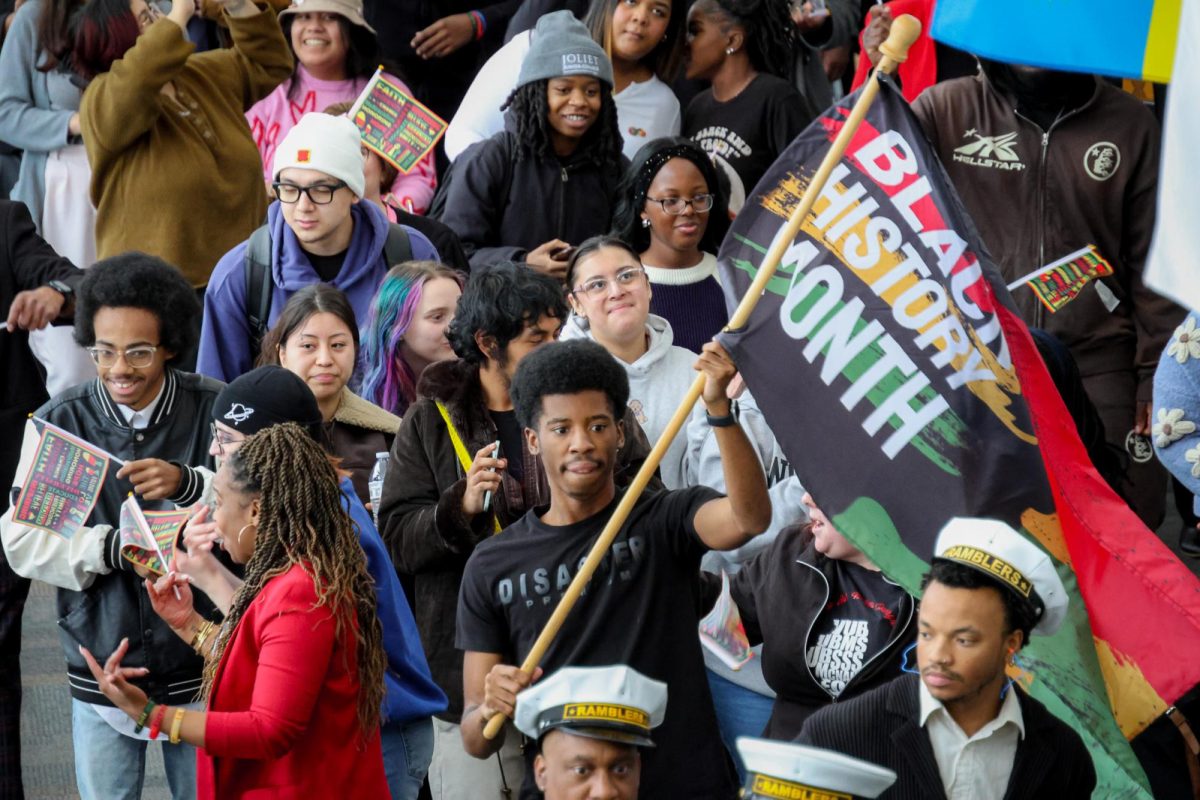

Throughout February, Joliet Junior College hosted a series of events to celebrate Black History Month, bringing students, staff, and community members together to honor Black culture.
The 2026 celebration was especially significant this month. According to Tonetta Jones, who helped organize many of the events through the Center for Multicultural Access and Success, this year marked the centennial of Black History Month.
“Black History Month this year was celebrated throughout February of 2026, and this marks 100 years of Black History Month,” Jones said. “It was founded by Carter G. Woodson. He chose February because it is the birth month of Abraham Lincoln and abolitionist Frederick Douglass.”
Jones explained that Woodson’s decision was intentional, even though many people assume February was chosen because it is the shortest month of the year.
To mark the milestone, JJC hosted a wide range of events aimed at educating students while also celebrating Black culture.
The month opened with a flag raising ceremony and a parade inspired by a New Orleans tradition known as a second line parade. The event featured the Windy City Ramblers, a marching band that led participants across campus.
“In a second line parade, the band is the first line, and the spectators become the second line,” Jones said. “That’s what makes it special, because people can join the parade and be part of it.”
The opening ceremony also included the raising of a Black History Month flag and a performance of the National Black Anthem. Jones said the event is one of the most meaningful moments of the month because of the strong support from the college’s leadership.
“The flag raising is a very commemorative moment where everyone gathers to watch the Black History Month flag go up,” Jones said. “Having the support of the president and the cabinet makes it really special.”
Jones said that the event often attracts students who were not originally planning to attend.
“Sometimes people who didn’t know about the event end up joining,” Jones said. “They jump right in and realize how fun and meaningful it is.”
Another highlight of the month was a virtual reality experience that allowed students to explore important moments in civil rights history. Using Oculus headsets, participants watched a 15-minute Metaverse program titled MLK: Now Is the Time.
The experience placed viewers in the middle of historic events, including the March on Washington, while also educating them about issues such as redlining and racial discrimination.
“One part of the experience simulates being in a police car and the anxiety of being told to keep your hands on the steering wheel,” Jones said. “It helps students understand those moments in a more personal way.”
The virtual reality exhibit was also featured at the Sankofa Shop, an event that highlights Black owned businesses. Jones explained that the name Sankofa carries its own meaning.
“Sankofa means ‘to go back and get it,’” Jones said. “It encourages us to go back and invest in Black businesses.”
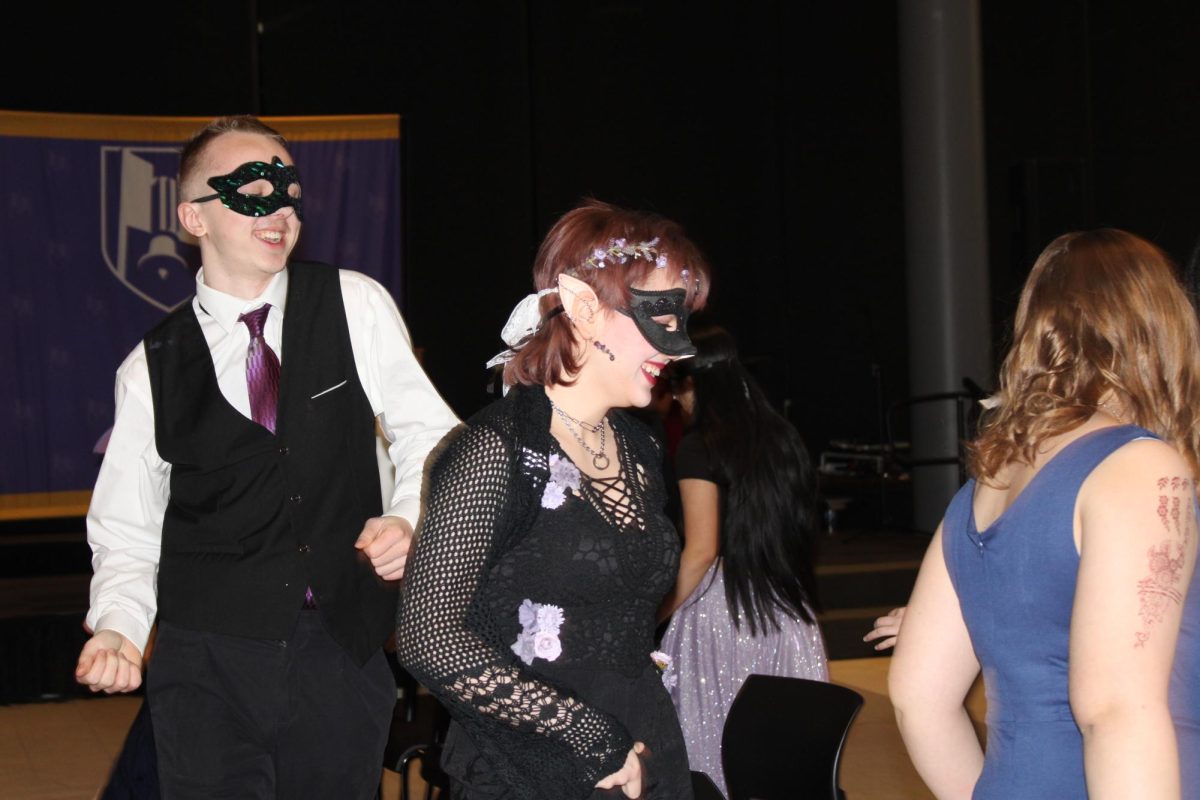
The month ended with the annual Black Student Union Gala, an event that raises funds for scholarships through the Center for Multicultural Access and Success. The gala included a formal program as well as opportunities for students and community members to connect and celebrate together.
For Black Student Union Vice President Jordan Allen, the gala was the highlight of the month.
“My mother and I worked so hard on the decorations for the gala that I can’t help but call it my favorite event,” Allen said. “Many BSU members pitched in to help, and I’m very proud of how it turned out.”
Allen said the event required weeks of preparation. Members used painted boxes and artwork to transform the space for the celebration.
Beyond the events, Allen believes Black History Month carries a deeper meaning.
“I am an African American woman, so it means a lot to me,” Allen said. “Black History Month is a reminder for all Americans that African Americans are Americans. It reminds us of the contributions that African Americans have given to this country.”
Allen hopes the celebration encourages people of all backgrounds to recognize the importance of Black history beyond the month of February.
“Hopefully Black History Month reminds everyone that Black history should be honored and celebrated for more than just one short month,” Allen said.