




















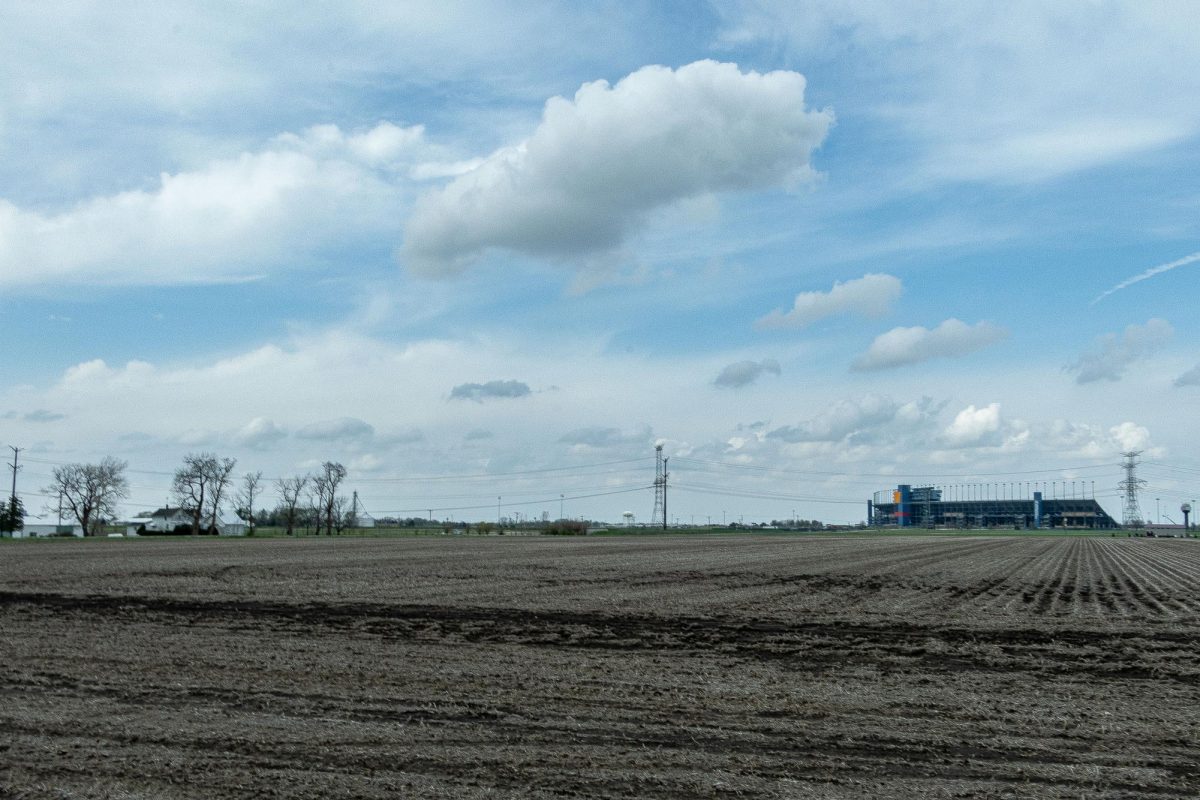
The Joliet City Council approved plans for a 795-acre data center on March 19. The project would be the largest data center in Illinois. According to various news reports, construction is slated to start in 2027, and the first building of the data center is expected to be ready by 2028. The Blazer reached out to several stakeholders in an attempt to understand the data center’s impact on the community and Joliet Junior College.
The city of Joliet
To better understand the city’s role in the development, Sydney Thompson, Communications Director for the City of Joliet, addressed some of the key questions and concerns raised by the public in an interview with the Blazer.
According to Thompson, the developer has committed up to $100 million toward infrastructure improvements, including roads, sidewalks, and city services, an investment she said is meant to support both the project and the surrounding community.
“These commitments were an essential part of the city’s review process and helped ensure that Joliet will have the resources needed to support the infrastructure and needs of our community,” Thompson said.
How those funds will be distributed remain undecided. Allocation decisions will be made by the City Council through a public and transparent process, Thompson said.
Economic impact is one of the city’s strongest arguments in favor of the development. Backed by a project labor agreement and strong union support that was visible during council meetings; the construction phase alone is expected to generate between 7,000 and 10,000 union jobs. Beyond that, the city points to partnerships between the developer and local educational institutions aimed at expanding technical training programs, with an emphasis on preparing and recruiting local residents for long-term roles tied to the facility.
Still, concerns have largely centered on environmental impact—specifically water usage, energy demand, and noise pollution. Thompson said these factors have already been outlined in the planning.
The facility has the potential to operate at a massive energy scale, drawing comparisons to the output of the Hoover Dam at approximately 2,080 megawatts. In response to concerns about rising electricity costs, Thompson emphasized that, under a written agreement with ComEd, all interconnection and infrastructure costs will be covered by the developer.
“This helps ensure that electric service remains stable, reliable, and fairly priced for the community,” Thompson said.
Water usage, another major point of concern, is expected to be capped at 150,000 gallons for cooling. According to the city, the facility will rely on a closed-loop system that recycles water and significantly reduces overall consumption.
“The facility’s water use is strictly limited and is well within the city’s system capacity,” Thompson said. “In fact, the data center is expected to use significantly less water than many other types of development that could be built on the same property.”
To address quality-of-life concerns, the developer has committed to incorporating natural buffers, setbacks and modern construction techniques designed to minimize noise. The project will be required to meet Illinois Pollution Control Board standards, as well as local noise ordinances outlined in the Joliet Code.
As the project moves forward, the city said it is committed to maintaining transparency by providing public access to available documents and updates as new information becomes available.
While officials present the development as measured and well-regulated, many of the questions raised remain rooted not just in what has been planned but in how those plans will translate once the project becomes a permanent part of the city’s landscape.
JJC student perspectives
JJC students are raising questions about what the project could mean for their community. Some students the Blazer interviewed expressed optimism, pointing to economic benefits. “I think it could help the city grow,” said one JJC student, who wished to remain anonymous. “More jobs and more money coming in is usually a good thing.”
However, most students raised concerns or uncertainty. Environmental impact was the most common issue, especially the large amount of resources data centers require.
“The data center is going to be taking a ton of water from an aquifer that’s depleting and it’s going to generate harmful infrasound,” said Sean Miller, JJC student and president of the JJC debate team. “And it’s going to consume a ton of energy which will affect the energy bills of Joliet residents. All of that on top of the fact that it’s being built on a floodplain, meaning the area around the center will flood more often. This will affect us as JJC students because poor health almost always means poor academic performance.”
Some students who talked to the Blazer were wondering how construction could affect daily life, including traffic, noise and long timelines. “It sounds like it’s going to take years to build,” said one JJC student who wished to remain anonymous.
What the data center means for JJC
In terms of how this data center will impact the JJC main campus, Kelly Rohder-Tonelli, JJC’s executive director of strategic engagement, expressed that the school’s stance on this project and developments similar to it is always informed by the perspective of “workplace preparation.”
Seeing as there are a number of jobs tied to AI and its subsequent data centers (for cloud computing, data storage, etc.), Rohder-Tonelli maintains that community colleges are crucial in providing residents with the knowledge and experience they need to attain these jobs. If the Joliet data center means local job opportunities in digital infrastructure, JJC will do its best to prepare students for those jobs, according to the school.
When it comes to finances and utilities, JJC’s Vice President of Administration and Finance Karen Kissel mentioned that developments on a scale as large as the Joliet data center can impact local tax bases in a variety of ways. These changes hinge on the way things like assessed valuation are structured and handled. However, Kissel also said it would be presumptuous to draw any firm conclusions regarding specific financial effects the data center may have on JJC.
According to an ABC7 March 19 news report, Joliet officials estimate that JJC is expected to receive $76 million over 30 years from the data center, with millions more expected to go to the city, Will County and Joliet Township High School.